
One of These Is an Appliance and One Is a Protocol Suite
Meshtastic and Reticulum get compared as if they were rival LoRa messaging apps. They are not the same kind of thing, and the comparison misleads people in both directions. Meshtastic is a finished product: flash the firmware, pair your phone, send texts over LoRa. Reticulum is a general-purpose network stack, closer in ambition to a replacement for TCP/IP than to a chat app, which can run over LoRa radios and also over serial links, packet radio, and tunnels across the ordinary internet.
If you want to text your friends off-grid with the least friction, use Meshtastic (or MeshCore). If you want to build networks, bridge dissimilar links into one addressable whole, and get serious cryptographic properties by default, Reticulum is the more interesting system and will cost you a weekend to understand. Choosing Reticulum because you heard it was “better than Meshtastic” and then wondering why your radio does nothing on its own is the standard failure path.
Details below come from the Reticulum manual and the projects’ own material. The current shipping release is RNS 1.3.9 from July 2026, while the online manual is already labelled 1.4.0, so expect a little drift between the docs and what pip actually installs.
What Reticulum Actually Is
Reticulum is a networking stack designed to work over more or less any medium that can move data. Its stated minimum requirements are almost comically low: a half-duplex channel, an average throughput of 5 bits per second, and a physical MTU of 500 bytes. Anything that clears that bar and can host a Python 3 runtime can carry Reticulum.
Addresses are 128-bit, derived as SHA-256 hashes truncated to 16 bytes, with room in the design to expand to 256-bit if anyone ever needs an address space for galactic-scale networks. The wire format is compact: a 2-byte header (the second byte is the hop count), one or two 16-byte addresses, a 1-byte context field, and 0 to 465 bytes of payload.
There is no central authority, no address assignment, no DHCP equivalent, and no registration. You generate keys and you have an address. That is the whole onboarding process.
Where Your Address Lives Is the Big Mental Shift
In Meshtastic, identity belongs to the radio. The node has a name, a number, a position, and channels with pre-shared keys. Your radio is who you are on the network. Reflash it or lose it and that identity goes with it.
In Reticulum, your LXMF address lives in the software on your phone or laptop, not in the radio. The radio is interchangeable. Your address is more like an email address or a phone number that follows you: swap your RNode for a different one, or drop the radio entirely and connect over TCP, and you are still reachable at the same address. The same identity can be reachable simultaneously over LoRa and over the internet, and correspondents do not need to know or care which path is carrying the traffic.
That single design decision explains most of the practical differences that follow.
An RNode Is a Modem, Not a Node
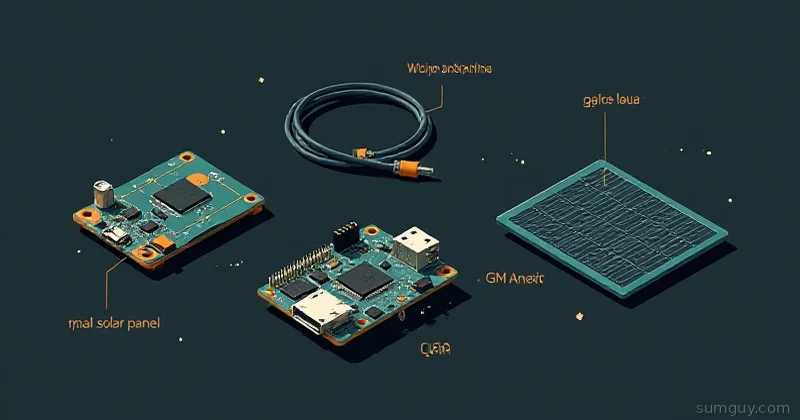
The thing that trips up most newcomers: RNode firmware, the stock Reticulum LoRa firmware for boards from LILYGO, Heltec, and RAK, turns a dev board into a radio interface. It does not turn it into a self-sufficient mesh participant. An RNode needs an attached computer or phone running the Reticulum stack in order to send, receive, or route anything.
Compare that to a Meshtastic node, which routes traffic happily with no phone attached and nothing but a battery. Or a MeshCore repeater, which is designed to sit on a mast with no host at all.
The consequences are practical. A Reticulum LoRa relay site means a radio plus a small computer, typically a Pi or similar, which means more power draw and more to go wrong. In exchange, that site can bridge your LoRa segment into TCP links, serial links, and anything else you attach, which no Meshtastic node can do.
Cryptography Is Not a Fair Fight
Meshtastic’s model is channel-based pre-shared keys. It works, it is easy to explain, and the default public channel’s key ships in the firmware, so the default channel is effectively public.
Reticulum encrypts everything by default and the properties are considerably stronger:
- Per-packet derived keys. Any packet to a single destination is encrypted with keys derived from an ECDH exchange against that destination’s public key.
- Links with forward secrecy. Reticulum can establish an encrypted channel called a Link, using Curve25519 ECDH to derive per-link ephemeral keys. Forward secrecy is on by default for Links.
- Initiator anonymity. Both single packets and Links offer it. The recipient can be addressed without the sender revealing an identity.
- Optional key ratcheting per destination, giving forward secrecy to link-less packet communication too.
There are four destination types worth knowing. Single destinations are the common case, identified by a unique public key and always encrypted. Group destinations use a symmetric key shared among members. Plain destinations are unencrypted. Link is the established encrypted channel.
Here is the detail I find elegant: plain and group destinations are only reachable directly and are never transported over multiple hops. Multi-hop transport in Reticulum requires encryption, because the per-packet encryption is what verifies routing paths and keeps them alive. Encryption is load-bearing here, and the routing layer runs on top of it. You cannot accidentally send cleartext across the network, because the network has no way to carry it.
Announces vs Node Info
Both systems need a way for nodes to tell the world they exist. Meshtastic broadcasts node info periodically. MeshCore has adverts, user-triggered on clients and every 12 hours by default on repeaters.
Reticulum’s announce mechanism is more carefully rate-limited than either, which matters on 5-bit-per-second-class links:
- Transport nodes forward announces they have not seen before, and ignore exact duplicates
- Each node records which transport node an announce arrived from and how many retransmissions it took to get there
- After 129 retransmissions (the default limit is 128 plus one) an announce stops propagating
- Retransmission happens after a randomised delay, on every interface with spare capacity
- By default no more than 2% of an interface’s bandwidth is spent on announces, configurable per interface
- When an interface is saturated, queued announces are prioritised inversely to hop count, so nearby destinations get discovered first even on a slow link bridging to a faster network
That last rule is the sort of thing that only exists in a stack designed by someone who genuinely expected to run over a 300 baud link. It means local connectivity stays responsive even when the network is drowning in distant announces.
Any Medium, Transparently Bridged
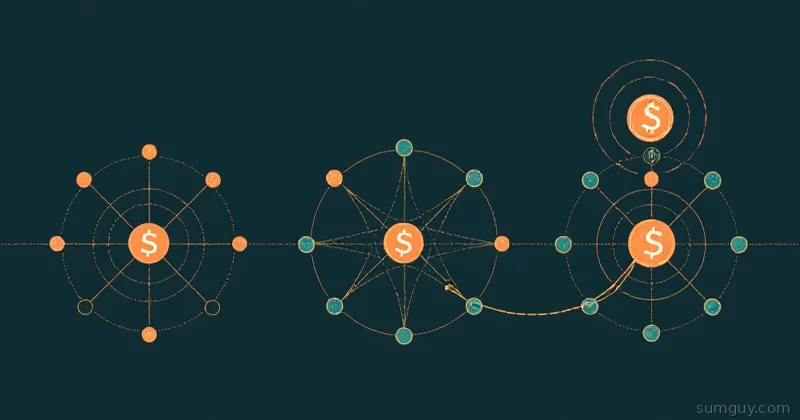
Reticulum connects to radio modems, data radios, and serial ports, and can tunnel over IP links. All of those become one addressable network. A message can start on a LoRa segment in your neighbourhood, cross a TCP tunnel over somebody’s home internet, and arrive at an RNode three countries away, with no gateway configuration and no address translation, because it is all one flat 128-bit address space.
Meshtastic has an MQTT bridge that can link distant meshes through a broker, and it works, but it is a bridge between meshes rather than a unified network layer. The addressing, routing, and encryption remain LoRa-mesh concepts with an internet detour bolted on.
If your ambition involves heterogeneous links, this difference is the entire reason to pick Reticulum.
Transport Nodes and Store-and-Forward
Two roles have no direct Meshtastic equivalent.
A transport node is any Reticulum instance configured to route on behalf of others. It forwards announces, maintains path tables, and carries traffic between interfaces. Turning one on is a config flag rather than separate firmware, and a transport node bridging a LoRa interface and a TCP interface is what stitches a local radio segment into the wider network.
A propagation node handles store-and-forward for LXMF. Messages for a peer who is offline get held and delivered when that peer next checks in, which makes asynchronous messaging work over a network where nobody is reliably online. MeshCore’s room servers occupy a similar niche for group chat, and Meshtastic has nothing comparable in the base firmware.
Getting started is less intimidating than the architecture suggests. Install the stack, describe your interfaces, run it:
pip install rns lxmfrnsdrnstatusInterfaces are declared in a config file rather than through a device menu:
[[RNode LoRa Interface]]  type = RNodeInterface  interface_enabled = True  port = /dev/ttyUSB0  frequency = 867200000  bandwidth = 125000  txpower = 7  spreadingfactor = 8  codingrate = 5
[[TCP Client Interface]]  type = TCPClientInterface  interface_enabled = True  target_host = some.reticulum.host  target_port = 4965
Those two blocks are the whole trick. The LoRa radio and an internet host become interfaces on the same network, and Reticulum routes between them without further instruction. rnstatus shows you what is up, and rnpath will tell you the discovered path to a destination. That is the moment the design tends to click for people.
The Apps
Reticulum is a stack, so the user-facing experience comes from applications built on it, most using LXMF for messaging:
- Sideband, the main graphical client for desktop and Android, messaging plus telemetry and voice
- MeshChat (
liamcottle/reticulum-meshchat), a straightforward mesh comms app that speaks LoRa via an RNode - NomadNet, a terminal client with a browsable page system, appealing if you like the idea of a tiny text-first internet
- Ratspeak, chat, voice calls, and games across desktop, mobile, and embedded
Reasonable and improving, but this is the gap. Meshtastic’s app experience is more polished, better documented, and vastly more widely used, and if usability is your priority that gap will decide the question.
One Thing to Know Before You Commit
Mark Qvist, who created Reticulum, withdrew from public engagement in December 2025. Code kept shipping (1.3.9 landed in July 2026, including a security fix for rnsh), the protocol specification is public domain, and the source is open, so nothing about the project is locked up or unforkable.
What stopped was the founder-led public conversation, and the community moved to fill it. Developers building on Reticulum filled two sessions at FOSDEM in February 2026, and the volunteer effort since has aimed squarely at the documentation gaps and new-user friction that were always the project’s weakest point.
Read that as a project in transition rather than a project in trouble. It does mean that when you get stuck, you are more likely to be reading a forum thread or a community wiki than an official guide, which raises the price of the weekend I promised you earlier.
Which One Do You Want
Pick Meshtastic if: you want off-grid text messaging that works this afternoon, you want the radio to route with no host computer, you value a large community and hardware matrix, or your local network already runs it. This covers most people, and there is nothing embarrassing about it.
Pick Reticulum if: you want to bridge LoRa with internet links into one network, you care about forward secrecy and initiator anonymity as defaults rather than options, you want an identity that outlives any particular radio, you are running unusual media like packet radio or serial links, or you find the design genuinely interesting and want to learn a networking stack from first principles. It rewards that curiosity.
Pick MeshCore if the question was really “which LoRa messaging firmware”, since that is the closer comparison and I made the case for MeshCore separately.
Can You Run Both?
Yes, and people do. They are different firmwares on different radios and cannot interoperate, so you need separate hardware for each, or you reflash when you switch. They share the band, so plan your airtime and site your antennas with both in mind.
The common setup among people who run both is Meshtastic or MeshCore as the everyday local messaging network, because the community is there, plus a Reticulum node as the interesting long-haul and experimentation platform. That is a sensible division of labour and not a contradiction.
The Short Version
Meshtastic is a product that does one job well with almost no assembly. Reticulum is infrastructure you build with, and its cryptography and addressing are meaningfully more sophisticated than anything in the LoRa messaging firmwares. Judge them on what you are trying to build, and ignore anyone who ranks them on a single axis.